

1. What salt does to steel – corrosion in slow motion and fast forward Corrosion of steel is, at its core, an electrochemical process: iron loses electrons and reacts with oxygen to form iron oxides – rust. Pure water accelerates this process. Saltwater accelerates it dramatically because chloride and sulphate ions complete the electrolytic circuit, […]
Knowledge
4 posts
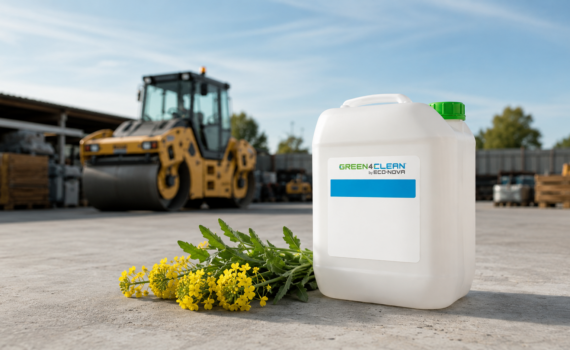
1. What „bio-based“ means in technical terms Bio-based essentially means just one thing: the main active ingredients are derived from renewable, plant-based or microbial sources rather than from fossil raw materials. In the field of cleaning chemicals, this primarily concerns three classes of substances: vegetable oil derivatives (e.g. from rapeseed, sunflower, soya) – the main component of modern bio-based release agents; plant-based surfactants (such as those based on sugars or amino acids) […]

1. Why leaving bitumen residues to sit can prove costly. At first glance, bitumen residues on machinery seem like a cosmetic issue. On closer inspection, however, they are quite the opposite: the effectiveness of the release agent is reduced. On a roller-bandage area coated with old bitumen, the freshly applied release agent can no longer be distributed evenly […]

1. What an asphalt release agent is actually required to do An asphalt release agent has a single, very clear purpose: to prevent hot bituminous mix from adhering to metallic or coated surfaces. In doing so, the release agent is subjected to conditions that are rare in industry: hot mix, typically 140–200 °C; mechanical stress, for example from rotating drums […]